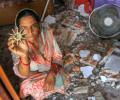
The state has witnessed a spurt in Pakistani shelling and firing along the IB and the Line of Control. Over 700 such incidents were reported this year, which have left more than 44 people, including 18 security personnel, dead and scores injured.

Khizr Khan, 66, father of Army Captain Humayun Khan, hit the campaign trail for the first time along with Hillary Clinton to make an emotional endorsement of the Democratic nominee.

'From Doklam to Wuhan and the return of the India-China relationship to its previous equilibrium is indeed a major contribution of President Xi and PM Modi. Without any doubt they deserve the kudos for their sagacity and their wisdom,' says Ambassador Gautam Bambawale, India's envoy to China during the Wuhan summit.

Japan could soon be the second country after the US with which India has a logistics support agreement. Besides the LSA, India and Japan may also sign a maritime domain awareness agreement which would enable the two navies to share information. For example, if a Japanese P-1 maritime patrol aircraft detects a Chinese submarine in the Indian Ocean, it would pass on the information to the Indian Navy, reveals Ajai Shukla.

The world had almost completely forgotten about Partition, and many never learned about it, says Guneeta Singh Bhalla, the woman who founded the 1947 Partition Archive.

'It's a dream, but will I give it up? No bloody way,' Umesh Pandey, the former Bangkok Post editor turned Opposition candidate, tells Rahul Jacob.

Disappointed over Pakistan's slow pace of trial in Mumbai terror attack case, a top American lawmaker has demanded that the seven suspects, including Lashkar-e-tayiba operational commander Zakiur Rehman Lakhvi, be handed over to the International Criminal Court to bring them to justice.

The Haryana government on Friday set up a committee consisting of three women officers, including a deputy inspector general, for receiving any complaint of rape of women in Murthal near Sonepat during the Jat stir.
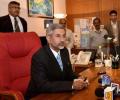
He said the 2 countries have handled border issues in the past.

Unprecedented violence... Mobs determined to teach Delhi a lesson... An incompetent chief minister... Losses of over Rs 200 billion. Haryana's Jat agitation has a somber message for the nation.

'Can anyone honestly say with hand on heart that our streets and office buildings, railways and other public spaces are any cleaner?'
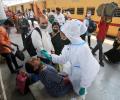
'But to see the effects of that, it will take a week or two more.'

To make it possible to attract the best of our young people to join the armed forces, all university courses anywhere in India should include compulsory National Service for a total period of six months, says T Thomas

Unlike the Germans, Britons began to face the hard truths about their colonial empire only recently.

Annabel Mehta, Sachin Tendulkar's mother-in-law, has dedicated her life to working with the Beautiful People of the other half of Mumbai without whom the city would neither exist nor thrive. Vaihayasi Pande Daniel met the amazing lady who was awarded the Member of the Order of the British Empire for her service to underprivileged communities.

After an aerial survey of the flood-hit areas, Prime Minister Narendra Modi on Thursday announced an immediate release of Rs 1,000 crore for relief and rehabilitation works in Tamil Nadu.

Only on Wednesday, in his Independence Day speech, Prime Minister Modi said he wants to resolve the Kashmir issue through Vajpayee's doctrine of "Insaniyat, Kashmiriyat, Jamhooriyat" - a testimony to the former PM's lasting legacy.
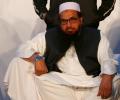
The perpetrators of the 2008 Mumbai attack, who shot dead 166 people, had confessed to details that should have been enough to hang him, but Pakistan enjoyed his anti-India rhetoric and let him spread his tentacles. A revealing excerpt from Khaled Ahmed's Pakistan's Terror Conundrum.

APJ Abdul Kalam was passionate about everything he did. He was perfect, says Aditi Phadnis
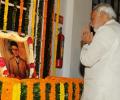
'There was the indisputable fact that Savarkar knew Godse, Apte and Karkare well, he had corresponded with them closely, and funded their extremely provocative newspaper, and they looked up to him as their icon.'

Shehla doesn't and has never shied away from talking the tough talk and walking the tough walk, says Gurmehar Kaur.

Group of young Afghans take to the skies of a capital where military helicopters and surveillance balloons are a far more familiar sight.

'At critical moments an inability to take tough decisions resulted in potentially far-reaching solutions slipping out of our grasp.' 'If similar opportunities come Narendra Modi's way will he act differently?' asks Karan Thapar.

In a strong message to Pakistan, Prime Minister Manmohan Singh on Thursday said anti-India activities emanating from there will have to stop for relations to improve and asserted that all steps will be taken to prevent "dastardly" acts like the recent killing of jawans on the LoC.
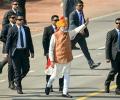
The 2019 election gives the Indian public the same choice: Between growth and oligarchs (or, in our case, dynasts and crony capitalists). If we chose wisely, well and good. If not, well, we have the Nehruvian Rate of Growth and massive corruption to fall back on. In a large sense, it is a choice between the India of the Lutyens elites and the Bharat of the real citizen, says Rajeev Srinivasan.

There is a vital difference between Bofors and Rafale, explains Shekhar Gupta.

Indians at large harbour a notion that their country is cherrypicking out of the American basket of goodies, but the policymakers in Delhi and the political leadership are well aware that it can only be a pipe dream since a military alliance with a superpower is a profound irrevocable commitment, observes Ambassador M K Bhadrakumar.

'While military acts such as the Uri surgical strikes are one option, cultural, economic and diplomatic isolation should also be part of the arsenal,' argues Sankrant Sanu.

Cheap milk prices, rising fodder cost and the difficulties in buying new cattle and selling old ones on account of cow vigilantism have cast a triple shadow on this sunshine sector in Indian agriculture, reports Sanjeeb Mukherjee.

Sri Lanka's newly elected president Mithripala Sirisena waves at media as he leaves the election commission in Colombo. Photograph: Dinuka Liyanawatte/ Reuters

Indians want change and progress. They should be willing to accept tough decisions, says Sanjeev Nayyar.

'The brutal violence of the UP government's first response to the anti-CAA protests suggests that the BJP will test drive the NPR/NRC in UP, where it has both a massive majority in the assembly and a chief minister whose instinct for Hindutva extremism and whose appetite for punitive policing allows a prime minister as darkly majoritarian as Modi to appear statesman-like,' notes Mukul Kesavan.

'When the first Islamic State flags appeared, it was called an aberration.' 'When videos appeared, they were termed exceptions!' 'It is high time we accepted that the global jihad is here.'

In this series, Rediff.com presents a selection of the year's most enduring moments year from around the world.
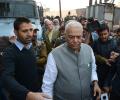
'The first clear cut call for 'engagement with all stake holders including separatists' came, not from the political class but the men in uniform,' points out Mohammad Sayeed Malik, the distinguished observer on Kashmir.

'Whether it's investments in Kashmir, building naval facilities, or selling top-of-the-range military equipment, Pakistan could well benefit more under Xi's watch.' 'Do Chinese concerns about the 'Islamisation' of Pakistan give it pause about how quickly to move forward with security and economic projects? At the moment the indication is quite the opposite: China is doubling down on its support to Pakistan, partly because of its fears about where the country is headed.'

'In the late 1960s, Shashi Kapoor did not have any work. We saw a lot of him then. He sold his sports car. Mum also started selling things because we didn't have money.' 'After Sharmilee (1971), things changed again.' Kunal Kapoor talks to Patcy N/ Rediff.com about his famous father.

Why did Kim Jong-un order his brother's murder?

'For a long time Pakistan dreamt that India would break up and that it would be the predominant power in the region,' says Colonel Anil A Athale (retd).
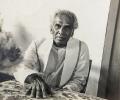
'The Congress party hated him because he had not gone to jail, he was not lathi charged, he had not gone on hunger strike.' 'They felt he had lived in London all his life and then he came to India and became an MP and a minister.'
